
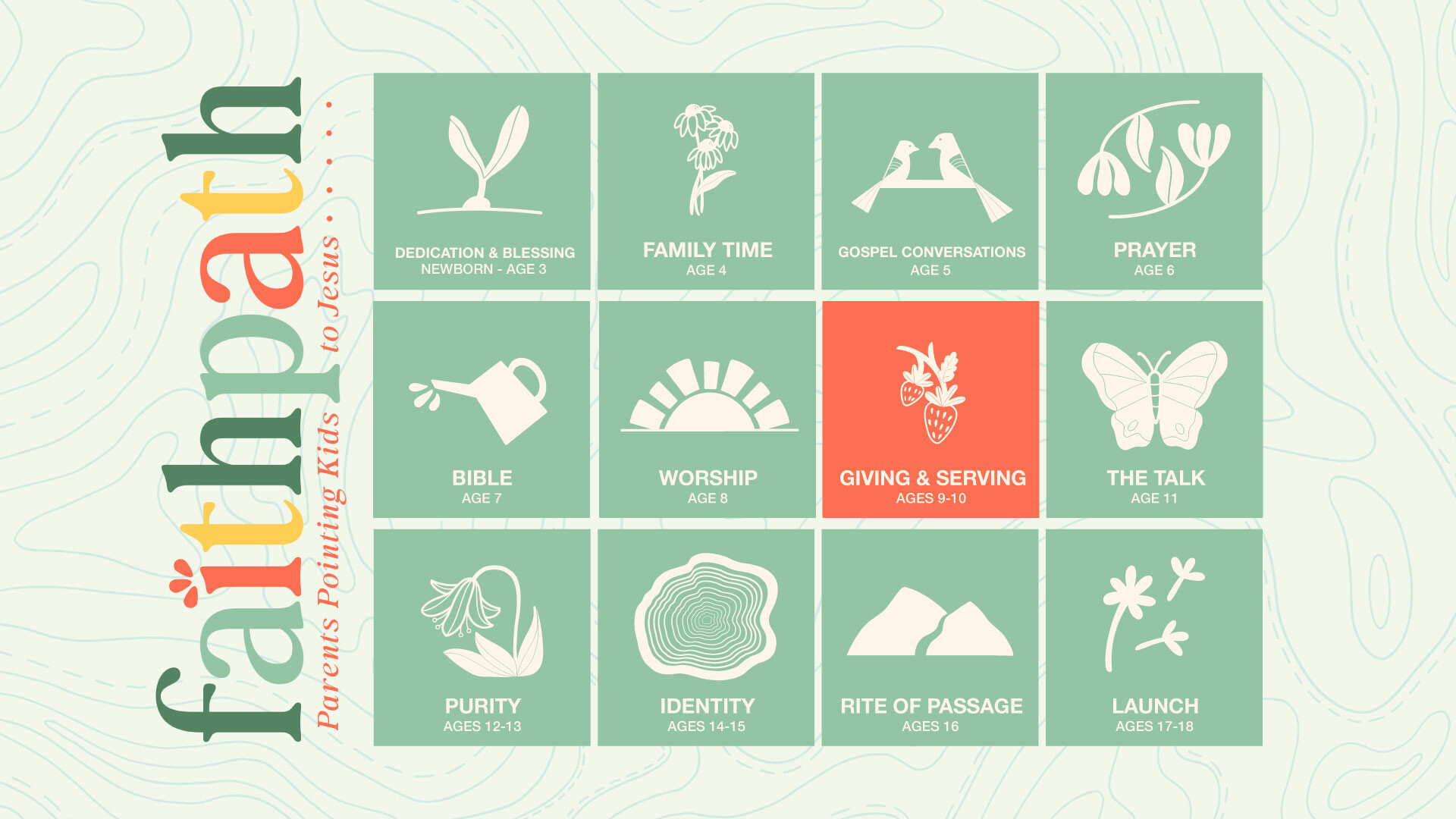
What is the Giving Step?
Age nine is a great time to teach your child to be a good steward of God’s blessings, which is why we’ve created the Giving step on the Faith Path. As the primary spiritual guide of your child, it is both your privilege and responsibility to help them see the importance of gratitude and generosity and begin their own journey of giving to God out of the resources He’s provided.
In reality, teaching children about money through tithes and offerings is not just about giving to God. It reminds us that we trust in and are dependent upon the One who gives all good gifts and that we are mere stewards rather than owners. Giving reflects obedience, showing that we love a God who is worthy to be obeyed in all areas of life. It’s also an opportunity to participate in something bigger than ourselves with eternal value.
Lastly, giving helps our children understand generosity. In their resource Teaching Kids to Tithe: An Onramp to Teaching Youth Generosity, the Tithe.ly company explains why: “Your children will either grow up knowing how to be generous and put the Lord first financially, or they won’t. As weighty as this reality is, it is inescapable: Whether our children know how to be generous is often up to their parents. Teaching children to give to the church is the best first step in helping children to become primarily generous. But teaching children to tithe does more than rescue them from a life of selfishness – it actually gifts them with an abundance of positive experiences as well.”
Put It Into Practice
The Giving step can include explaining some of the following truths to your child:
- Followers of Jesus are to give a portion of their income to support God's work through the church and to care for those in need. This is an act of obedience and worship.
- Genesis 14:20 records the first act of tithing, where Abraham gives a gift to Melchizedek. Later, we see Jacob making a vow to the Lord, worshiping Him, and giving back ten percent (Genesis 28:10-22).
- God encouraged a culture of gratitude among his people by asking them to set apart for the Lord a tithe of the land (seed or fruit) and of the animals (Leviticus 27:30-32). God also sought to create a culture of generosity by asking his people to give to the poor from the heart. (Deuteronomy 15:7-11)
- Jesus assumed we would give to the needy (Matthew 6:2-4), but also taught that we shouldn’t merely tithe while neglecting justice, mercy, and faithfulness. (Matthew 23:23)
- Paul instructed the Corinthians to steward their financial gifts, reminding them to give cheerfully and generously for God’s glory. (2 Corinthians 9)
Next Steps
Guiding your child to give cheerfully both now and in the years ahead will involve two key elements:
Personally Model It
Put into practice the disciplines you want your child to learn. This may mean taking steps to become a better steward of your family’s finances. Invite him/her to see how your family decides to spend money (tithing, savings, bills, generosity, etc.). Let him/her see you tithing cheerfully.
2 Corinthians 9:7 says, “So let each one give as he purposes in his heart, not grudgingly or of necessity; for God loves a cheerful giver.” Model a thankful heart. Express aloud your thankfulness for God's provision of your family's daily needs. When God provides for your family in unexpected ways in times of crisis, call attention to His faithfulness by having a special time of prayer and thanksgiving.
Intentionally Teach It
Explain what the Bible teaches about tithing—how it is an act of faith and obedience and how we are the managers, not the owners, of all the resources God has placed in our care. If your child receives money from an allowance, jobs, or gifts, take the time to show them how to figure out their own tithe and divide their money wisely.
A good place to start is to set aside 10% for giving, 10% for savings, and 80% for spending on other activities and items. You could even make three boxes labeled “Give,” “Save,” and “Spend” to help your child start the habit of good stewardship. Explain how money is used when it is given to the church. If you have older children and teens, discuss the church budget with them.
Introduce your children to missionaries or the ministry personnel of your church and discuss how tithes help them do God's work. Participate in our Bring Hope focus, which we offer every fall, spring, and summer. We tell kids all about our ministry partner for the semester and encourage them to give during our large group programming.
What is the Serving Step?
Age ten is a great time to help your child discover their unique gifts and then explore how they might use them for ministry or missions, which is why we’ve created the Serving step on the Faith Path. As the primary spiritual guide of your child, you can set a goal this year as a family to bless others through the spiritual discipline of service.
Put It Into Practice
Begin by explaining that God has blessed and entrusted each of us with resources, gifts, time, and talents. We have the opportunity to worship and honor God by using our resources, gifts, time, and talents in the spiritual discipline of service. Having been first loved and served by Jesus (1 John 4:19; Mark 10:45), we can joyfully and generously steward these blessings to serve others and bring Him glory (Matthew 5:16).
Additionally, as parents, we have the privilege of helping our children discover their unique gifts and explore how they might use them for God’s purposes. We also have the blessing of finding ways to serve together. Your child will appreciate learning how God has wired him/her and experience the joy of blessing others through serving.
One way your child can serve in our church is by joining our Crew kids’ worship team as early as Grade 2!
Next Steps
Here are some simple suggestions for serving as a family:
Do the GPS Exercise: Spend time talking with your child about their gifts (G), their passions (P), and the specific needs in your community (S). Talk about where those three things intersect and how your child can serve at that intersection.
Search for a Good Fit: Help your child find serving options based on the GPS exercise. It can be as simple as baking cookies for a homebound neighbor. It can be an extended serving time, such as a mission trip, or identifying a need and meeting it regularly. You can also look at the list of WoodsEdge volunteer opportunities to see how you and your family can serve others.
Set Expectations: Put your child more at ease by explaining what to expect. For example, if you plan to visit a nursing home, he or she may encounter odd sights, sounds, and smells.
Build Your Relationship: Take note of what your child does well while serving. Intentionally encourage your child by saying you are proud of how he/she demonstrated a great attitude or an area of strength.
Be Safe: Keep a close eye on one another, especially if children or teens are serving in unfamiliar settings.
Talk About It: Ask questions when you finish serving together such as…
- What were you most encouraged by while serving today?
- What kind of difference did you/we make?
- What is one way that you saw the Lord at work?
- How did it impact those you served?
- How did it impact you/your family?
- What is one thing you will walk away with from today?
Pray: Take a few minutes to pray, asking God to bless those you served.
Additional Resources
- Your Kids Can Master Their Money by Ron and Judy Blue
- Are You a Cheerful Giver?
- Teaching Kids to Tithe
- The Gospel Project at Home
- Helping Families Thrive in Christ from Focus on the Family
- Raising World Changers in a Changing World by Kristen Welch
- Take This Spiritual Gifts Test With Your Family from Focus on the Family
- The Mission-Minded Family: Releasing Your Family to God’s Destiny by Ann Dunagan
- 77 Ways Your Family Can Make a Difference: Ideas and Activities for Serving Others by Penny A. Zeller